
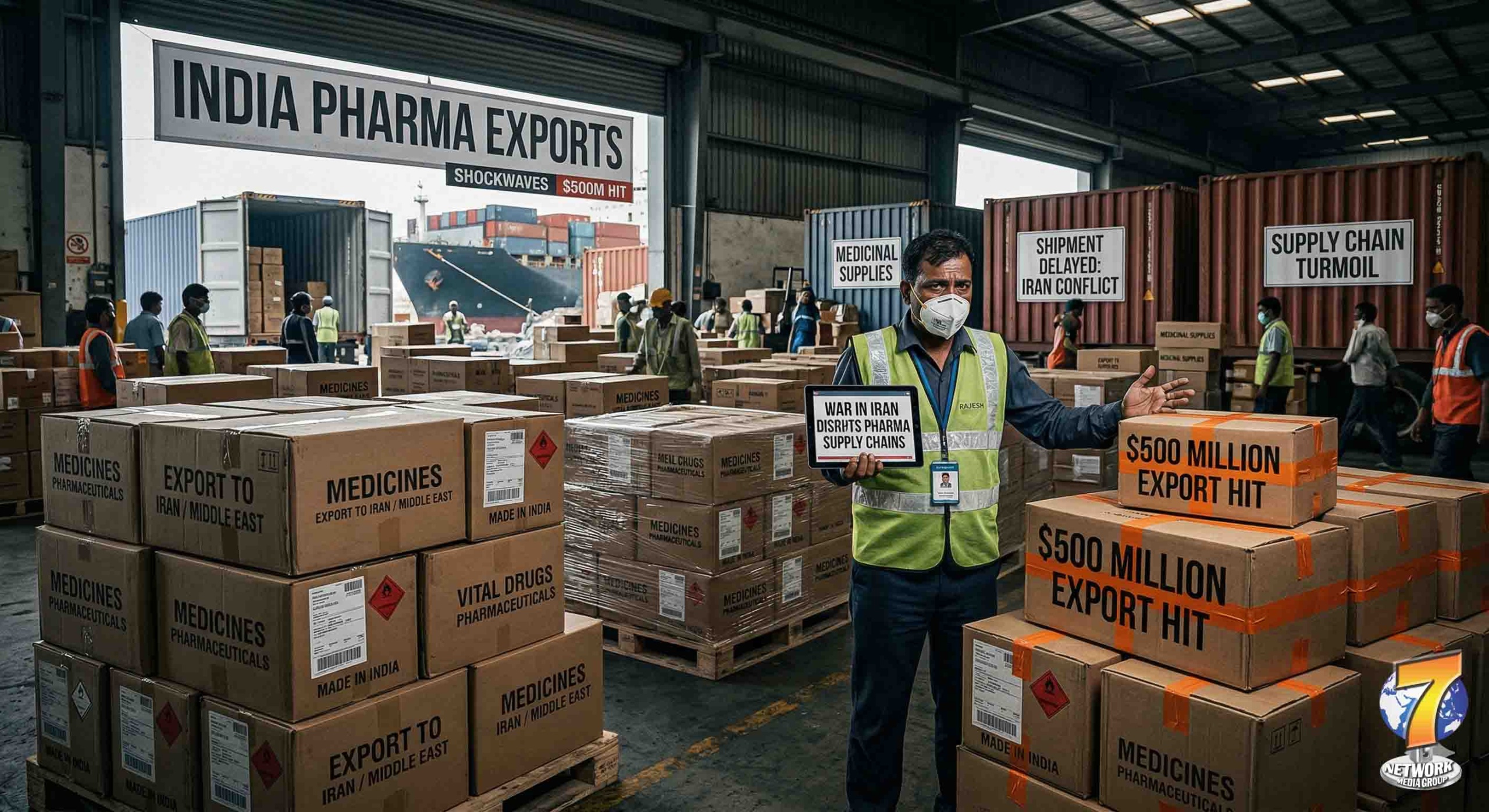
Global supply chain turmoil threatens India’s role as the “Pharmacy of the World,” with medicine prices rising and export lifelines under siege.
India’s pharmaceutical exports, valued at USD 30.47 billion in FY25, are staring at a potential loss of USD 300–500 million (₹2,500–₹4,500 crore) as the Iran war destabilizes Gulf shipping routes. The Strait of Hormuz, a critical artery for global trade, has become a chokepoint of uncertainty—forcing rerouting, inflating freight costs, and disrupting cold-chain logistics essential for vaccines and biologics.
- Raw Material Shock: Imports of APIs and intermediates have surged in cost by 30%, squeezing margins for generic drug makers.
- Medical Devices Crisis: Input costs for syringes, gloves, and diagnostic kits have spiked by 50%, threatening affordability.
- Domestic Fallout: Wholesale medicine prices in India have already risen by 10–15%, signaling a direct impact on patients.
- Global Competitiveness: India risks losing ground to China and the EU if disruptions persist, eroding its reputation as the world’s most reliable supplier of affordable generics.
Snapshot of the Crisis
| Factor | FY25 Status | War Impact |
| Exports | USD 30.47B | Loss of USD 300–500M |
| Raw Materials | Stable imports | 30% surge in costs |
| Medical Devices | Thin margins | Input costs up 50% |
| Domestic Prices | Stable | 10–15% rise |
| Global Position | 3rd by volume | Risk of erosion |
India’s pharma sector, celebrated as the lifeline for 191 nations, is now hostage to Gulf geopolitics. The Iran war is not just a regional conflict—it is a global health emergency in disguise. Every delayed shipment, every inflated freight bill, every disrupted cold-chain container translates into lives at risk worldwide.
This is a wake-up call: India must diversify trade routes, build strategic reserves, and invest in regional air corridors. The Pharmacy of the World cannot afford to be strangled by the Strait of Hormuz.
India’s Pharma Export Profile
- FY25 Export Volume: USD 30.47 billion (₹2.52 lakh crore), up 9.4% from FY24.
- Global Position: 3rd-largest by volume, 11th by value.
- Markets Served: Over 191 countries, with strong presence in generics, APIs, and vaccines.
Impact of Iran War on Pharma Sector
- Export Losses: Estimated at USD 300–500 million (₹2,500–₹4,500 crore) if disruptions persist.
- Raw Material Costs: Prices of key inputs surged by 30%, driven by container shortages and freight hikes.
- Medical Devices: Input costs up by 50%, squeezing margins on essentials like syringes and gloves.
- Wholesale Prices: Medicines in India already costlier by 10–15% due to shortages.
Comparative Snapshot
| Factor | Current Status (FY25) | War Impact |
| Exports | USD 30.47B | Loss of USD 300–500M |
| Raw Materials | Stable imports from China | 30% cost surge |
| Medical Devices | Margins thin | Input costs up 50% |
| Domestic Prices | Stable | 10–15% rise |
| Global Position | 3rd by volume | Risk of losing competitiveness |
When war chokes the Strait of Hormuz, it doesn’t just block oil—it blocks hope. India’s pharma exports are not mere shipments; they are lifelines for the sick, the poor, the forgotten. If global supply chains collapse, the world won’t just lose medicines—it will lose trust. We must act, disrupt, and defend our role as the Pharmacy of the World
India’s pharmaceutical sector, celebrated as the “Pharmacy of the World,” now faces its most severe geopolitical test. The Iran war has transformed the Strait of Hormuz from a silent artery of trade into a chokepoint of uncertainty. For India, the stakes are enormous: a potential USD 500 million export loss, rising domestic medicine prices, and erosion of global competitiveness.

This is not just a war fought with missiles—it is a war fought with shipping containers, freight bills, and disrupted lifelines of healthcare. India must urgently diversify trade routes, strengthen regional air corridors, and build strategic reserves to shield its pharma leadership from Gulf geopolitics.


